Mon, Jun 109:10 CT
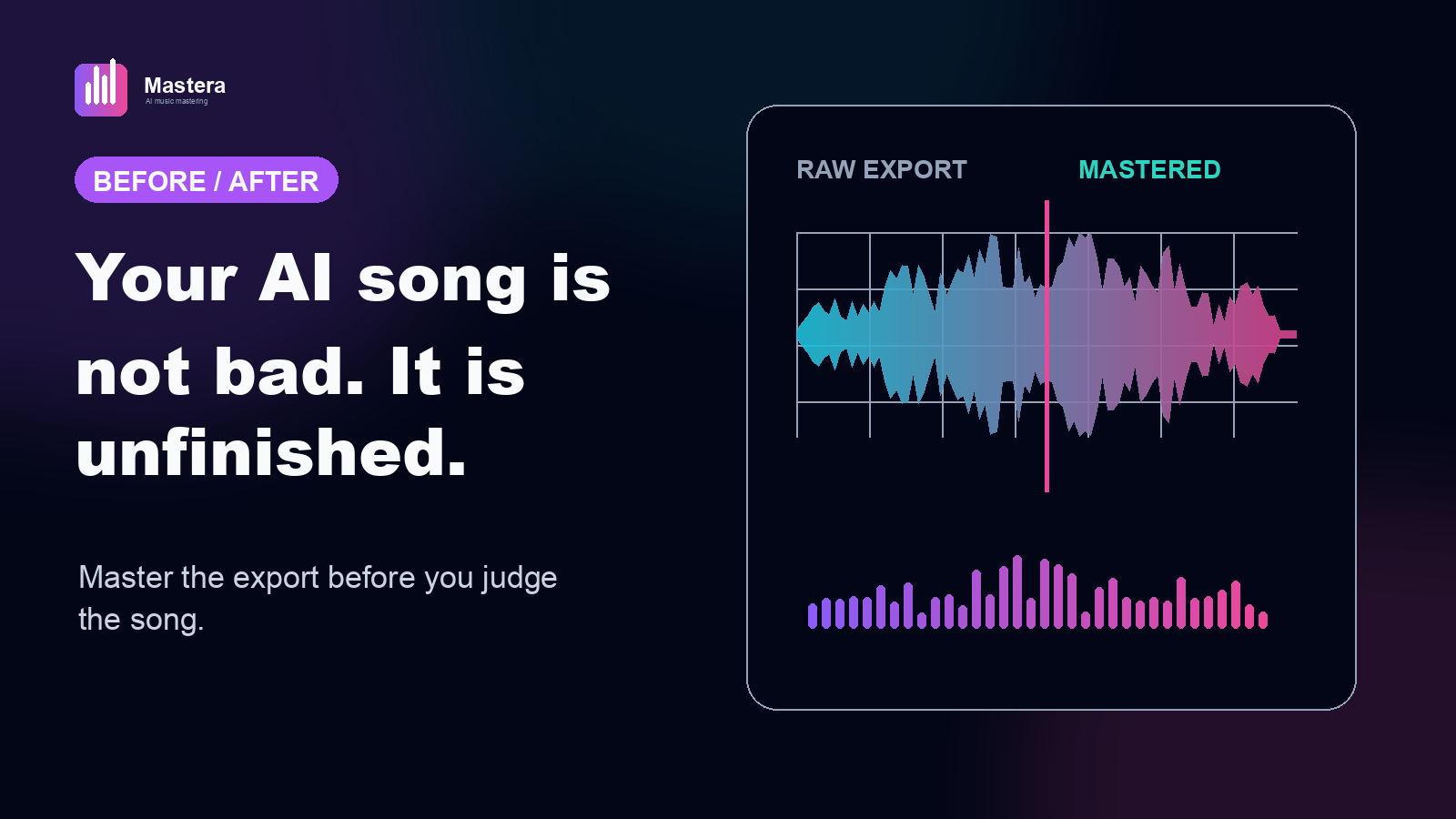
Your AI song is not bad. It is probably unfinished. Raw exports can have the idea, the hook, and the emotion, while still missing the loudness, width, and polish that make it feel release-ready.
A calendar-style reading view for the 30-day posting plan starting Monday, June 1, 2026.
Review the weekly balance across education, proof, empathy, workflow, and community prompts.
Your AI song is not bad. It is probably unfinished. Raw exports can have the idea, the hook, and the emotion, while still missing the loudness, width, and polish that make it feel release-ready.
What is your current post-Suno workflow before release?
Thread: Why your AI song sounds soft next to Spotify.
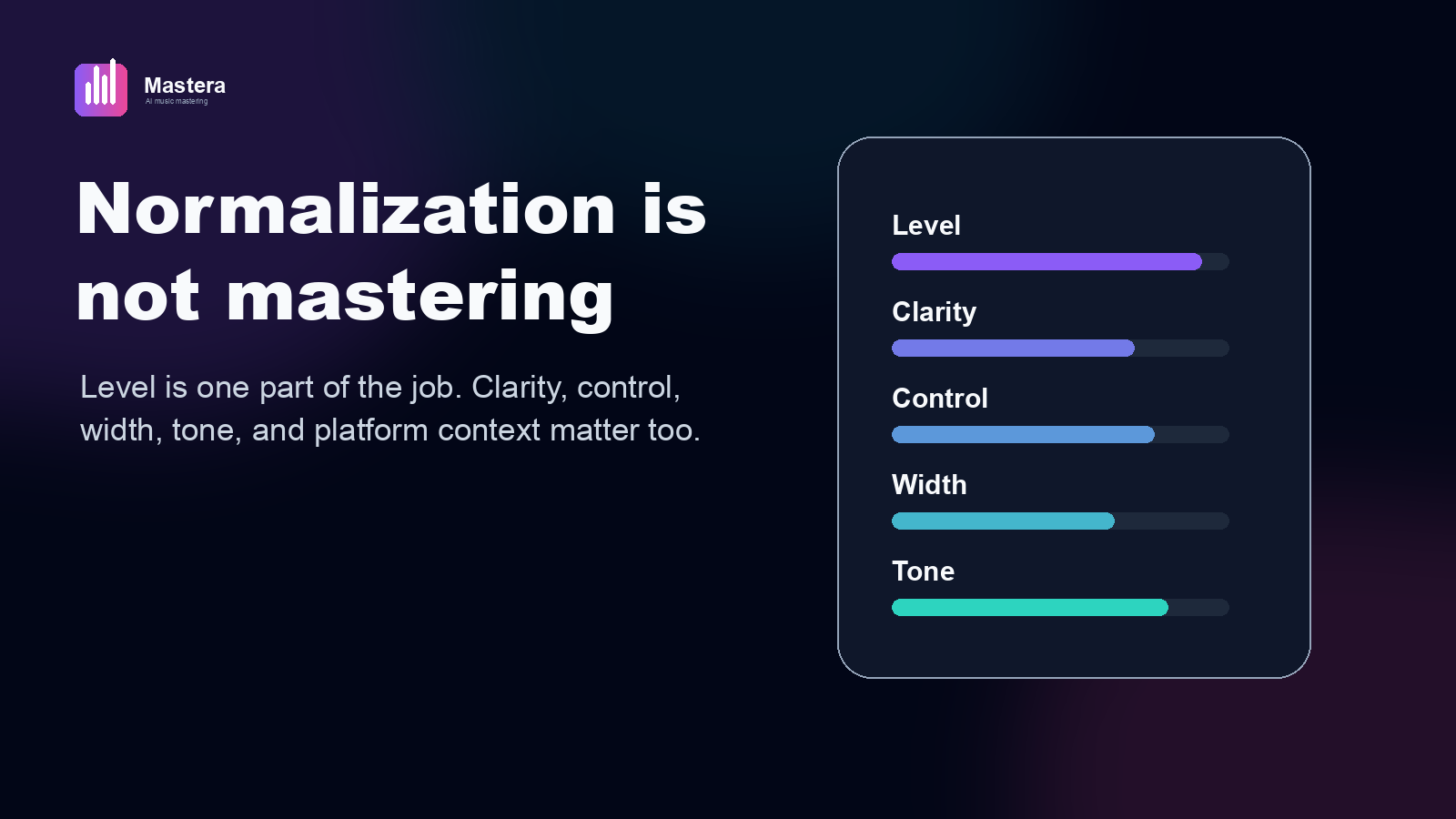
Normalizing a track can make it louder. It does not automatically make it clearer, wider, more controlled, or more streaming-ready.
The most frustrating part of AI music is not making the song. It is hearing a great idea suddenly sound small next to the playlist you wanted it to belong in.
Where do your AI songs fail the fastest? Headphones, car, laptop, or Bluetooth speaker?
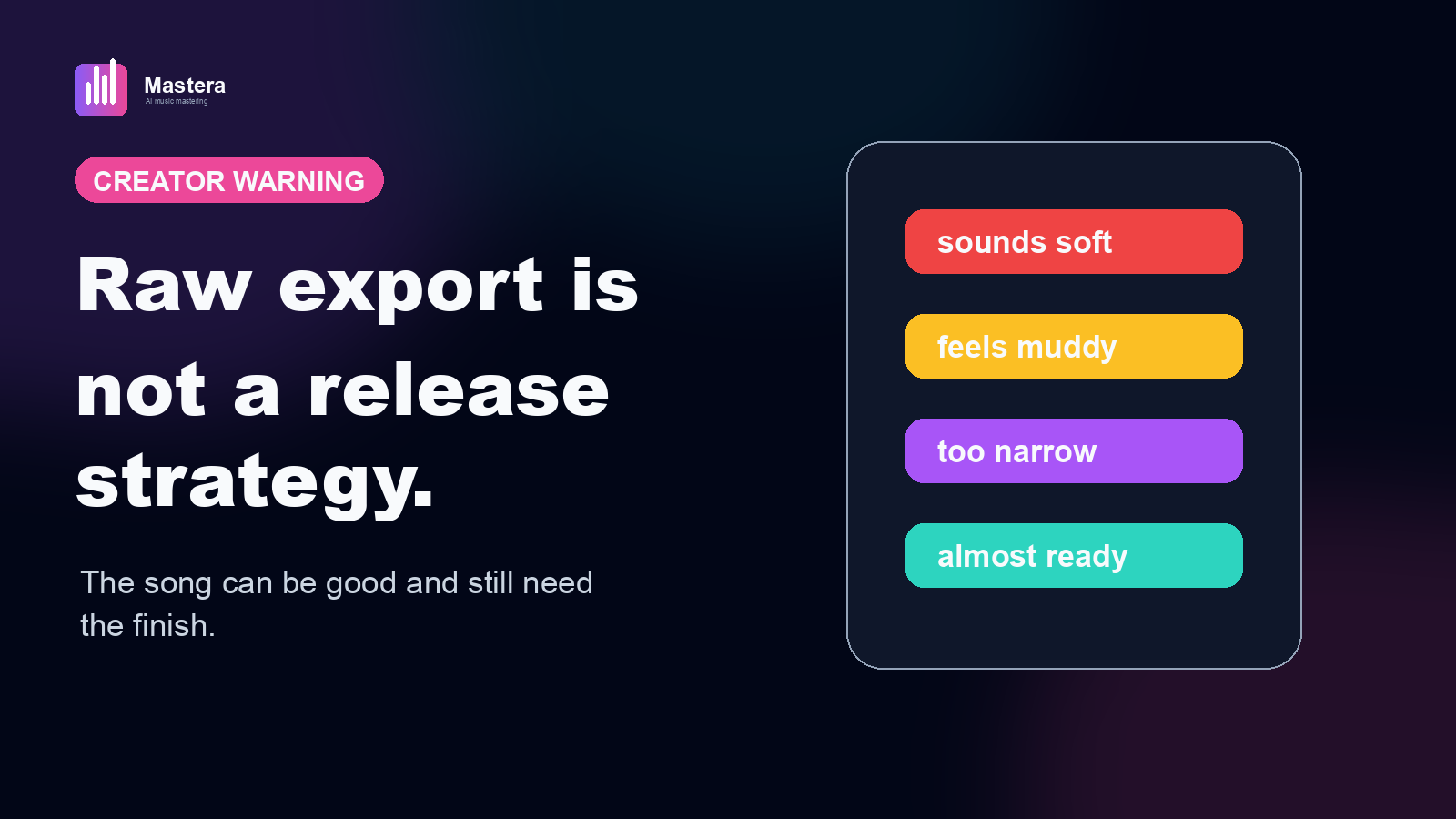
Three things usually give away a raw AI song: low-mid mud, weak loudness, and a narrow stereo image.
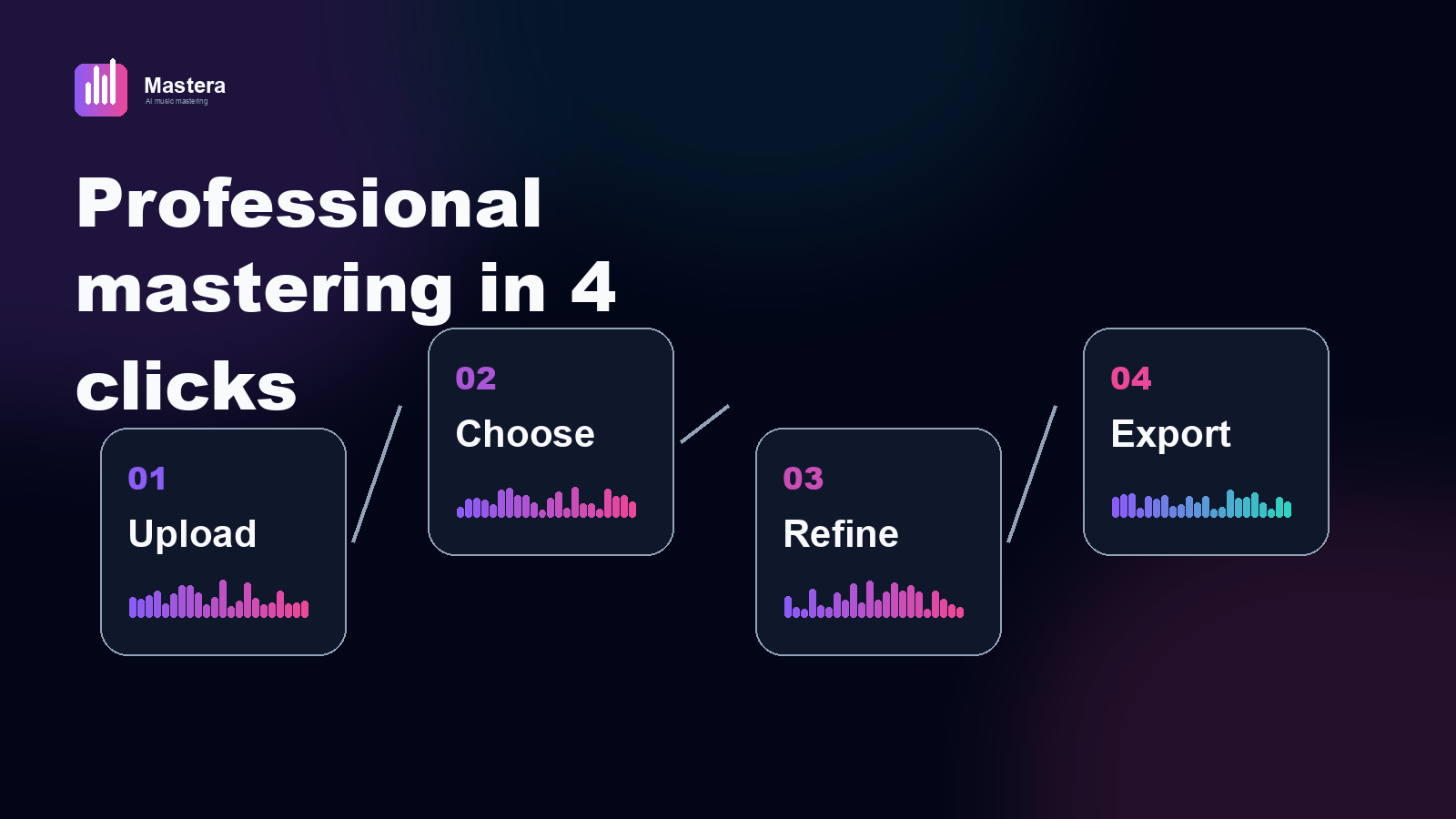
Mastera is built for the last step of AI music: upload your track, choose a direction, refine the sound, and export a stronger master.
If your Suno track sounds good alone but weak after a Spotify song, that is the exact gap mastering is supposed to close.
Have an AI song sitting in the almost-ready folder? Try mastering it in Mastera. Your first 3 tracks are free.
What is the best AI-generated song you have made so far, and what still keeps it from feeling finished?
A raw AI export can be catchy and still feel amateur. The song idea is not the problem. The finish is.
Review the weekly balance across education, proof, empathy, workflow, and community prompts.
Streaming-ready does not mean as loud as possible. It means the track holds up when platforms turn everything into a fair fight.
How do you decide whether an AI song is ready to upload?
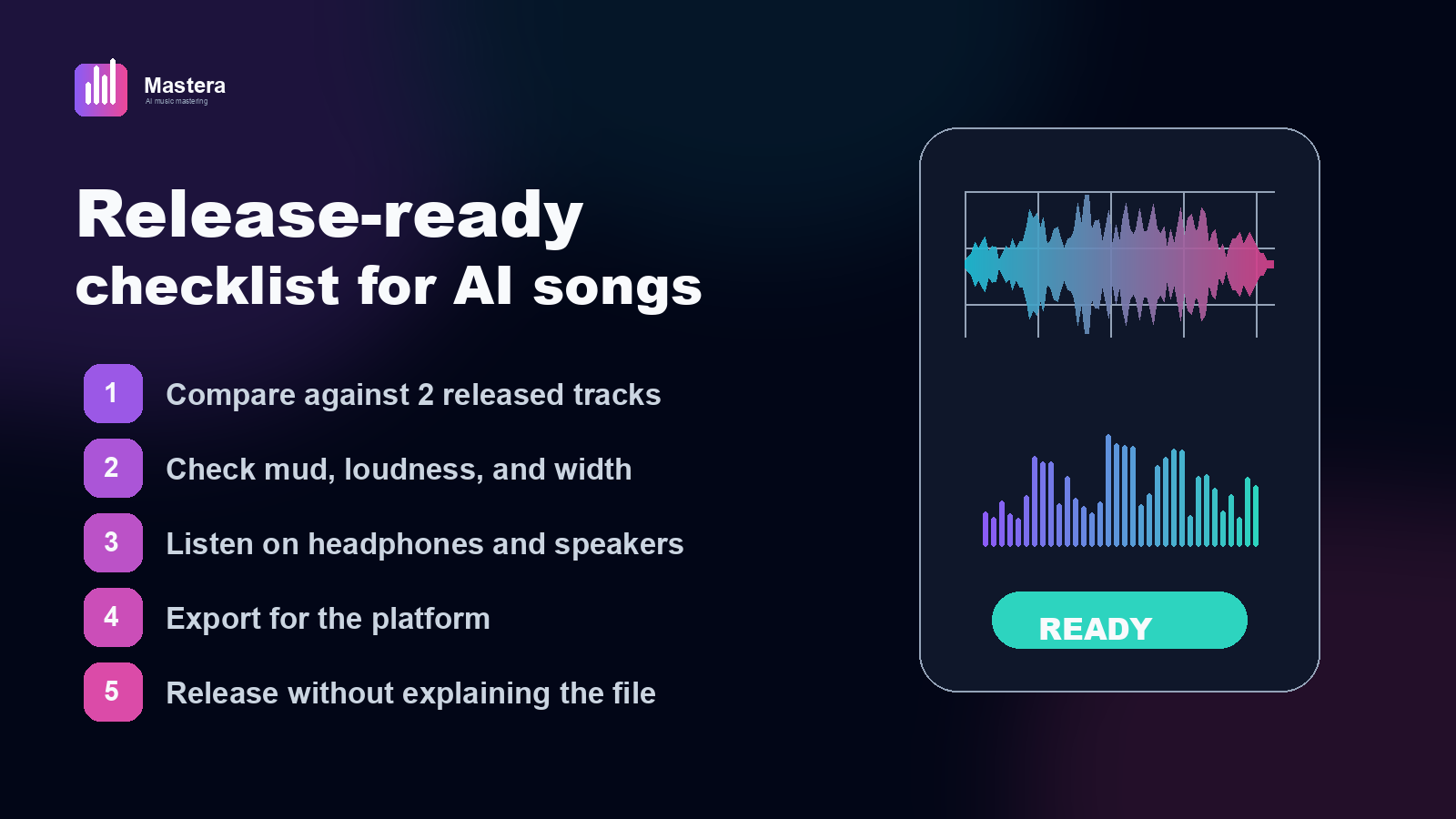
Thread: Release-ready checklist for AI songs.
No DAW rabbit hole. No plugin chain guessing. Just a guided mastering flow for creators who want the track finished.
The car test is brutal for AI songs. If the track disappears, gets boxy, or feels smaller than everything else, it probably needs a mastering pass.
After exporting a Suno or Udio track, what do you check first? Loudness, vocals, low-end, or overall vibe?
If your track sounds muffled, listen to the low-mids. That thick, boxy area can make a good song feel less expensive than it is.
Use Mastera when the song is close but not confident enough to release raw.
Stop treating mastering like a luxury step. For AI music creators, it is often the difference between cool prompt and real release.
If your next Suno export sounds good but not release-ready, run it through Mastera before you upload.
What makes an AI song sound AI to you: vocals, mix, low-end, stereo image, or something else?
If the vocal is there, the chorus works, and the emotion lands, do not abandon the song because the export feels flat. Finish it.
Review the weekly balance across education, proof, empathy, workflow, and community prompts.
The goal of mastering is not to change the song. The goal is to help the song survive real playback conditions.
Do you master every AI song you release, or only the ones you care most about?
Thread: Normalization is not mastering.
Mastera gives you 3 free tracks per month so you can test it on the song you already care about.
Almost ready is a real creative bottleneck. Mastera is built for the tracks sitting in that folder.
Biggest raw-export problem? Mud, quietness, stereo width, or harshness?
Before you upload an AI song, compare it against 2-3 released tracks in the same style. Do not compare it only against silence.
The workflow is simple: upload, pick a master, refine intensity, tone, width, and export for the platform.
The AI gave you the draft. You still get to decide whether it becomes a release.
Raw export in. Stronger master out. Try Mastera on the track you already know has potential.
If you could fix one thing about raw AI music exports forever, what would it be?
Loudness without clarity just makes a messy track louder. Clarity without loudness still sounds small. You need both.
Review the weekly balance across education, proof, empathy, workflow, and community prompts.
Your listeners do not know what 350Hz mud is. They just hear this sounds less finished. That is enough to matter.
What playback test exposes your AI tracks the fastest: headphones, car, laptop, or Bluetooth speaker?
Thread: The 4-click Mastera workflow.
We are building Mastera around one belief: AI music creators do not need more complexity at the finish line. They need confidence.
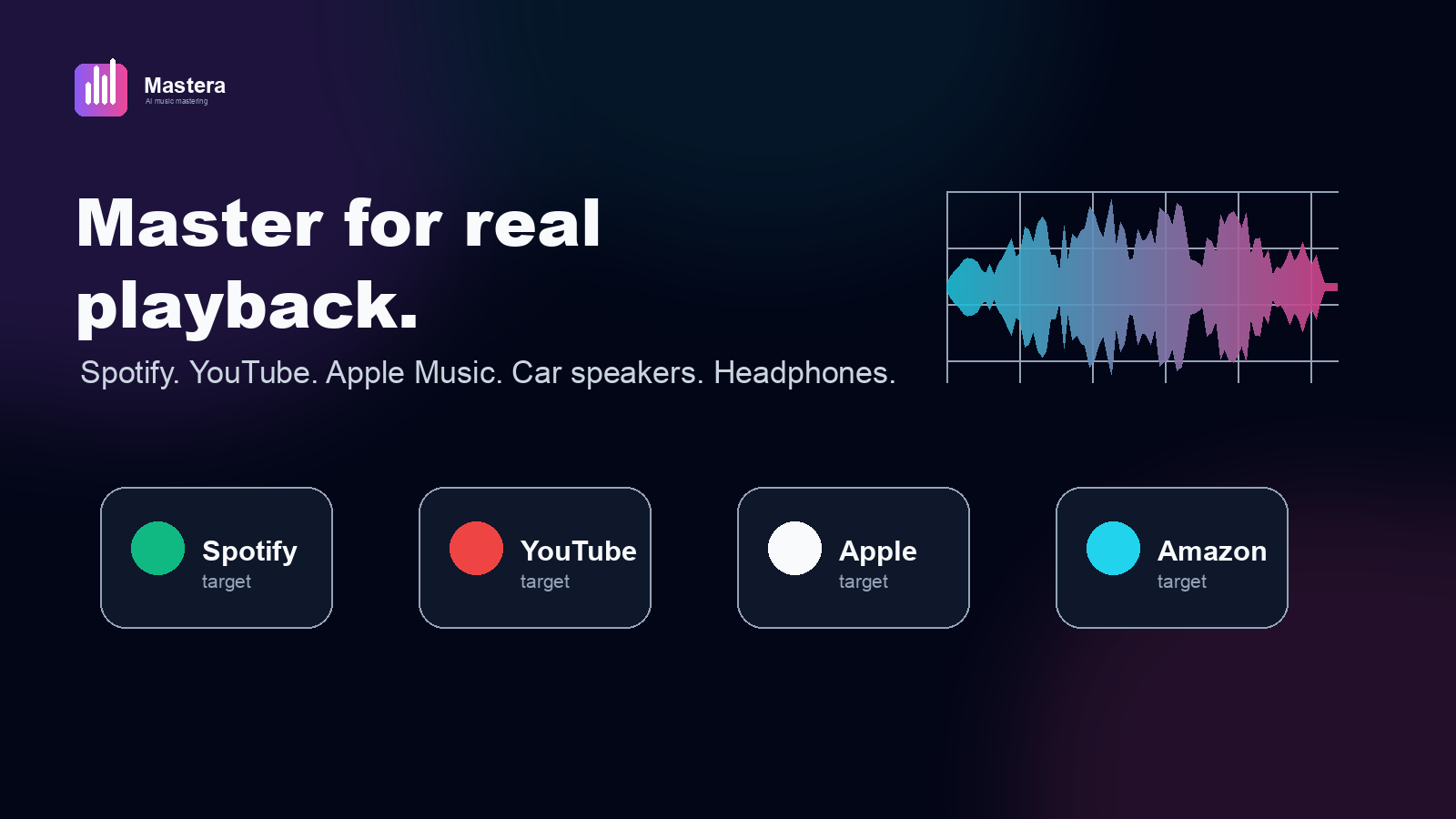
Your master should sound better on headphones, laptop speakers, Bluetooth speakers, and in the car. Not perfect everywhere. Believable everywhere.
What is your current final step? Upload raw, Audacity, LANDR-style tool, or human engineer?
Mastera is for the moment when your AI song has the hook, but not the finish.
Good AI songs deserve better than export and hope.
If a raw export sounds soft, do not only reach for gain. Ask what is stealing energy: mud, peaks, stereo shape, or dull top-end.
Master your next AI-generated song before it reaches your listeners.
Honest question for AI music creators: do you compare your exports against released tracks before publishing?
Do not let raw export quality make the decision for a song that has real potential.
Review the weekly balance across education, proof, empathy, workflow, and community prompts.
Thread: The almost-ready folder.
We are not trying to replace creativity. We are trying to protect it from bad final audio.
A good AI music workflow has a finishing step. Generate, choose, clean up, master, release.
Turn the track you almost released into the one you can stand behind.